
Battery swap cabinets are placed outdoors year-round. Stability is never a single-point metric, but a systems engineering effort jointly formed by power supply, structure, and communication. Only by making every link solid can the equipment run stably year after year.
PFC Charger: Friendlier Power Supply
Adopts a PFC (power factor correction) charging solution, improving power utilization efficiency while reducing harmonic interference to the grid and lowering losses and heat during long-term operation, providing a more stable energy foundation for high-frequency charging and battery swapping.
Cabinet Structure: Withstands Wind and Sun
The structural design of the cabinet in terms of protection rating, heat dissipation, and anti-theft directly determines the device's durability in rainstorms, high temperatures, severe cold, and other environments. Every structural consideration is to reduce device failures and on-site visits.
IoT Communication: Making Status Perceivable
Stable IoT communication enables the platform to perceive and manage the status of every battery swap and every battery in real time. Once communication becomes unreliable, devices turn into "invisible" islands, and large-scale operations become impossible.
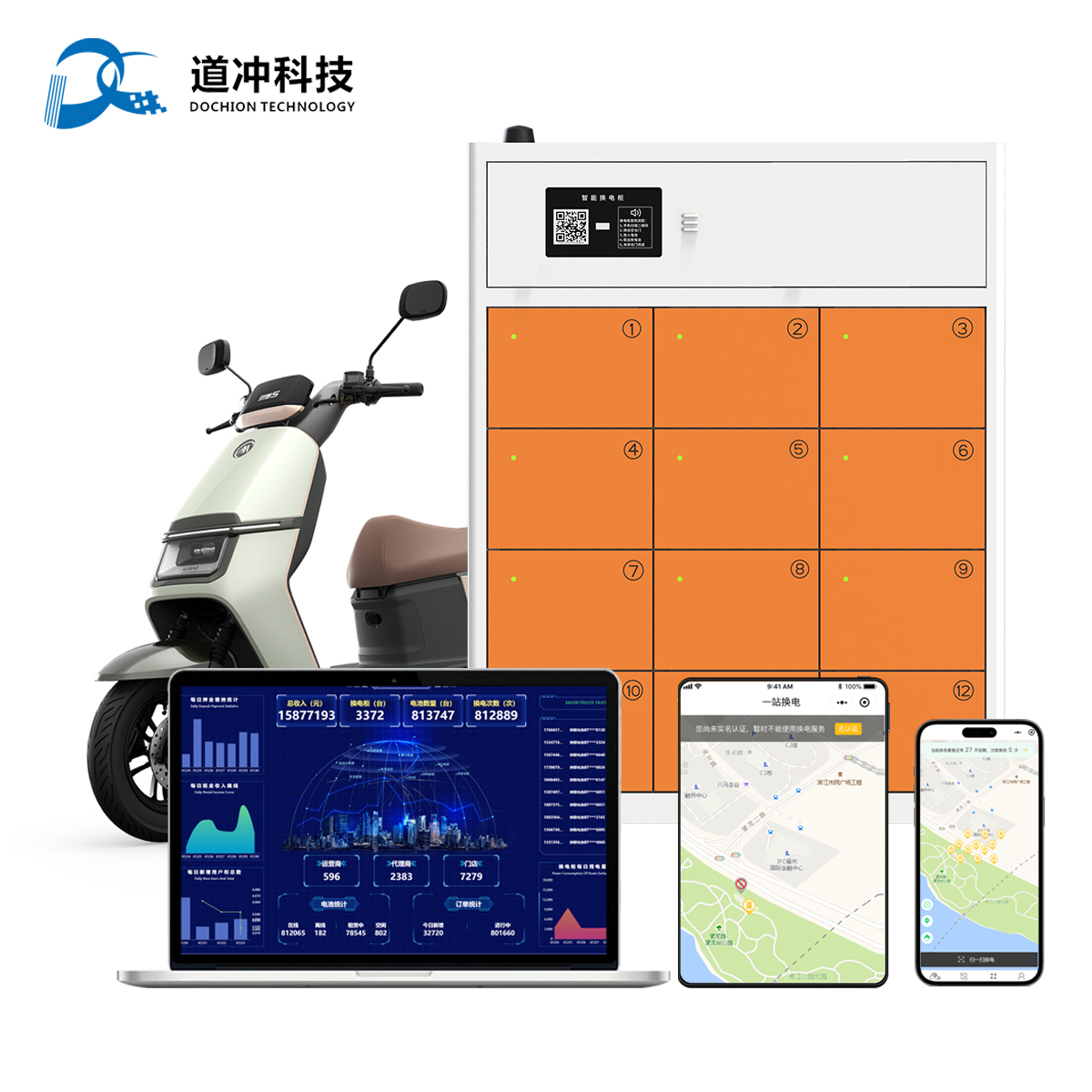
Only Systematic Engineering Achieves Long-Term Stability
Power supply, structure, and communication are closely interconnected; any weak link will drag down the overall experience. Daochong Technology regards stability as the technical cornerstone of production, precisely hoping that both operators and riders can "use it with peace of mind."